Why Our Rainy Climate Changes the Flooring Conversation
Anyone who has lived in Mukilteo, Everett, or anywhere else around Puget Sound knows our weather isn't just rain in the winter, it's damp air for a good chunk of the year. That humidity gets tracked in on shoes, soaks into mudrooms, and can creep into crawl spaces under older homes. It doesn't mean you're stuck with purely practical, ugly flooring, but it does mean the material you choose should handle moisture without warping, buckling, or growing mold underneath. That's really the first question we ask on every free in-home estimate: how does water move through this part of the house?
Luxury Vinyl Plank: The Go-To for Wet, High-Traffic Rooms
For entryways, kitchens, mudrooms, and basements, luxury vinyl plank is usually our first recommendation. It's fully waterproof at the plank level, it stands up to kids, dogs, and muddy boots, and today's LVP looks genuinely close to real hardwood or stone, not the vinyl your grandparents had. We've installed a lot of it over old carpet and old hardwood that had simply had enough, and it's one of the fastest, cleanest installs we do.
Tile Where Water Is a Given
Bathrooms, laundry rooms, and mudrooms are the spots where water isn't a maybe, it's a certainty. Tile, whether porcelain, ceramic, or mosaic, handles standing water and daily scrubbing better than almost anything else, and it holds up for decades when it's installed right, with a properly sloped, waterproofed subfloor underneath.
Hardwood and Engineered Hardwood Still Have a Place
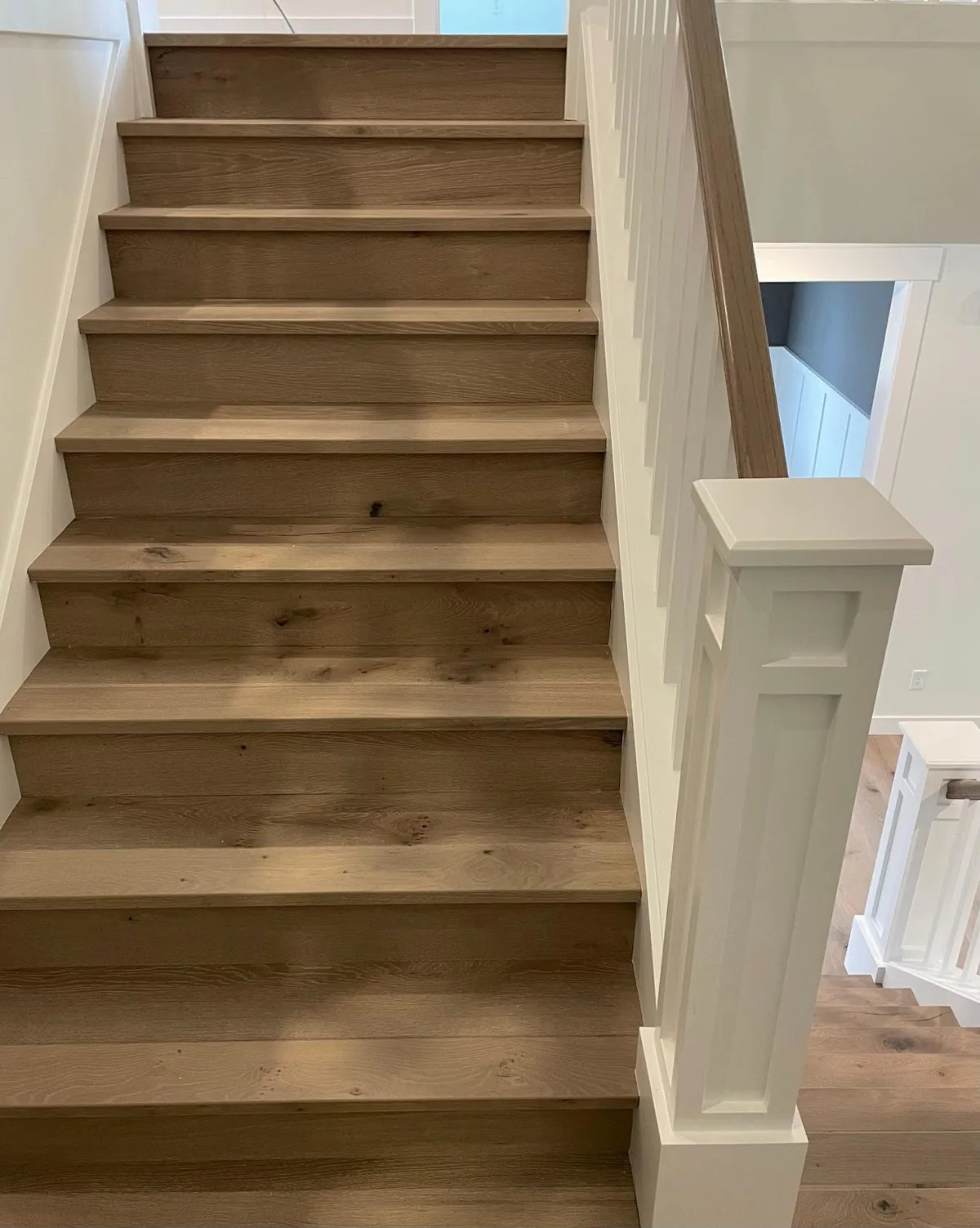
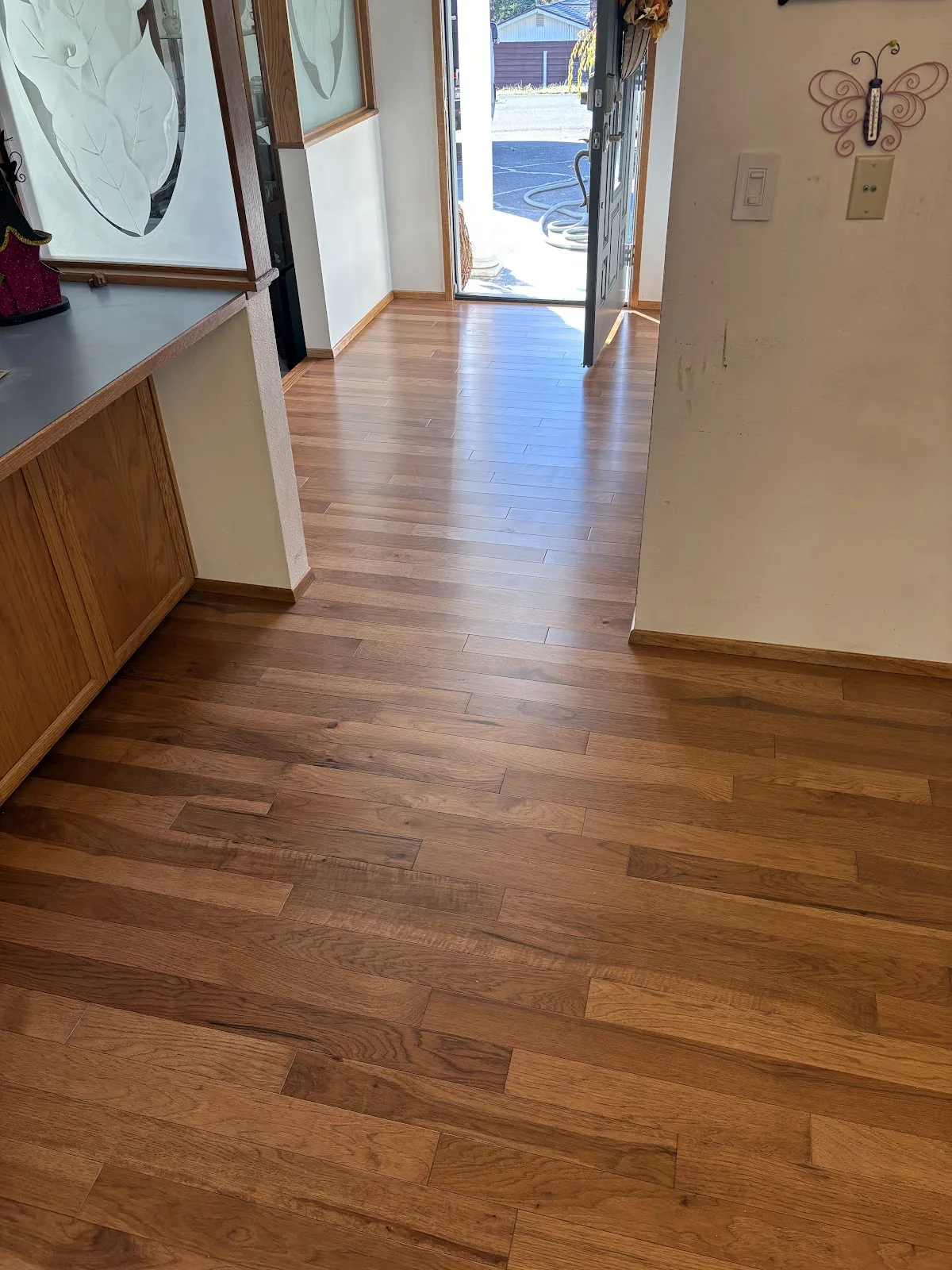
We're not going to tell you to rip out your hardwood floors just because you live somewhere rainy. Solid hardwood and engineered hardwood both do fine in living rooms, bedrooms, and dining rooms, the areas of the house that aren't taking on standing water or muddy shoes every day. Engineered hardwood handles the seasonal humidity swings of our climate a little better than solid wood, thanks to how it's built in layers.
Laminate and Carpet, Used in the Right Rooms
Laminate is a solid, budget-friendly option for bedrooms and home offices where moisture isn't a daily concern, and modern laminate wears well. Carpet, including carpet tile, still makes sense in bedrooms and basements that stay dry and where comfort underfoot matters more than water resistance.
| Flooring Type | Moisture Resistance | Best Rooms | Typical Lifespan |
|---|---|---|---|
| Luxury Vinyl Plank | Excellent, fully waterproof | Entries, kitchens, mudrooms, basements | 15-25 years |
| Tile | Excellent | Bathrooms, laundry rooms, entries | 30+ years |
| Engineered Hardwood | Good, better than solid wood | Living areas, bedrooms | 20-30 years |
| Solid Hardwood | Fair, sensitive to moisture | Living rooms, dining rooms, bedrooms | 30+ years with refinishing |
| Laminate | Fair, not fully waterproof | Bedrooms, hallways, offices | 10-20 years |
| Carpet | Poor | Dry bedrooms, basements | 8-12 years |
Older and Newer Puget Sound Homes Need Different Prep
A lot of the houses we work in around Everett, Lynnwood, and Edmonds are 30, 50, even 80 years old, and the subfloor underneath the old flooring is rarely flat anymore. Newer builds in places like Bothell and Woodinville usually start flatter, but still settle over time. Either way, leveling and prepping the subfloor before the new floor goes down is what actually makes a floor last, and it's a step some installers skip. Take a look at our service areas page to see if we cover your neighborhood.
- Ask about the wear layer thickness on any LVP you're considering.
- Have your subfloor checked for moisture and level before committing to hardwood.
- Use rugs and mats at every exterior door during the wet months.
- Keep gutters clear so water isn't pooling near foundation walls under wood-framed additions.
Not sure which flooring will actually hold up in your home?
Schedule your free in-home estimate